
AI Content Creation and the Future of Influencer Marketing
Here’s the uncomfortable truth: most “AI content” fails because it’s fast — not because it’s smart. The brands winning in 2026 are using AI to do something different: build creator campaigns that are measurable, scalable, and culturally relevant. In markets like Saudi Arabia and Dubai, where attention moves faster than budgets, the next era of influencer marketing won’t be driven by follower counts — it will be driven by signals: watch time, saves, shares, search intent, and audience fit.
This guide explains how AI content creation is reshaping influencer marketing — and how brands can use it responsibly to grow. If you want to explore tailored support for your brand or talent, see our services or reach us via Book a strategy session.
Why Influencer Marketing Is Entering a “Post-Follower” Era
Platforms increasingly reward relevance and retention, not popularity. That’s why many agencies are shifting from “one big creator” plans to portfolio creator programs (micro + nano + mid-tier), built around niches and communities. Recent industry reporting highlights agencies using AI to scale creator programs beyond follower metrics and toward psychographics, behavior, and content-context fit. This aligns with the broader “post-follower” movement in influencer marketing where the algorithm decides reach, and brand outcomes decide budgets.
The implication is strategic: your competitive advantage is no longer access to creators — it’s your system for choosing them and guiding content. That system is increasingly powered by AI: discovery, forecasting, creative testing, and performance measurement. Reports and research in 2025–2026 have emphasized AI’s growing role in creator marketing operations and measurement, while also warning about maintaining authenticity and the “human spark.” (See references at the end.)
AI Content Creation: What It Actually Means in 2026
AI content creation is not “press a button, get a campaign.” In practice, it’s a set of capabilities that enhance how marketers plan, produce, and optimize content:
- Insight generation: extracting what audiences want from search, social signals, and comment intent.
- Creative ideation: generating angles, hooks, scripts, captions, and variations for testing.
- Production acceleration: workflows for drafts, edits, subtitles, translations, and repurposing.
- Performance prediction: estimating which content formats will drive watch-time, saves, and conversions.
- Measurement upgrades: improved attribution models that account for “engaged views,” saves, and shares.
The best teams treat AI as a decision support layer — not a replacement for brand strategy, cultural understanding, or creator authenticity.
What’s New This Year: The Biggest Shifts Driving AI + Influencer Marketing
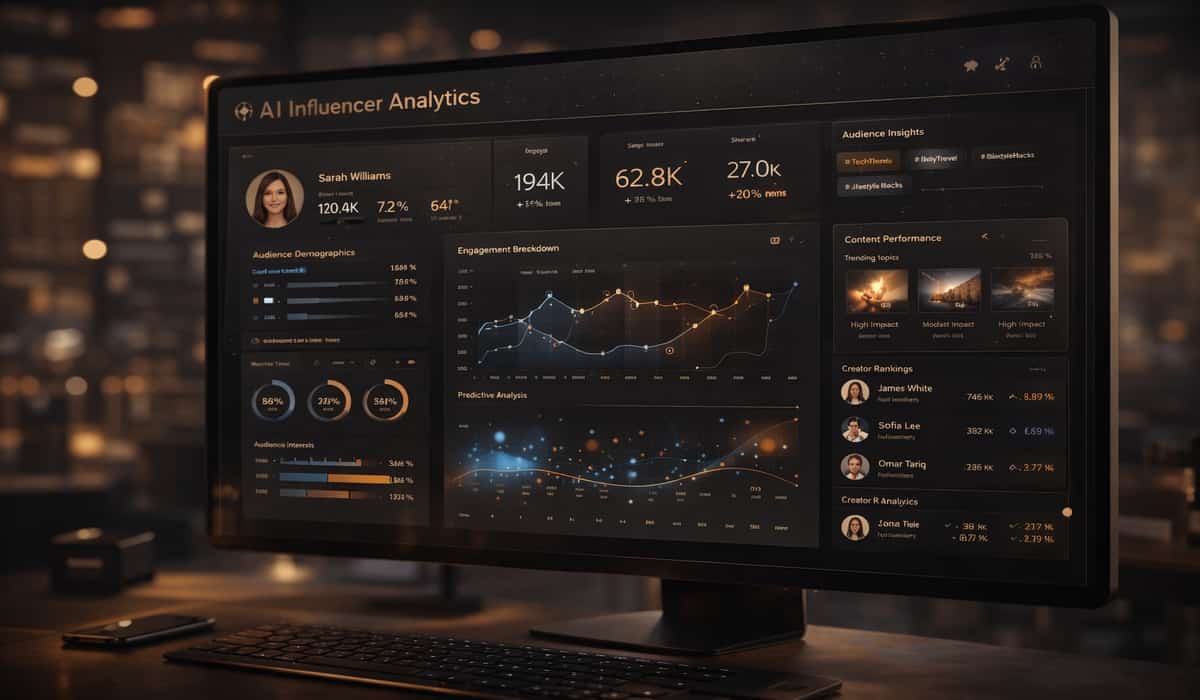
2026 is less about “AI tools” and more about AI systems. The trend is moving from isolated generators to connected workflows: creator discovery → content strategy → testing → measurement → optimization. Three developments are shaping results:
1) Better measurement: engaged-view attribution and social signals
Platforms are increasingly refining measurement to capture high-value social interactions such as saves, shares, and engaged views. This matters because influencer content often works by creating demand and trust before the click. When measurement better credits these interactions, brands can invest with more confidence — and creators can be evaluated on outcomes, not vanity metrics.
2) AI-assisted campaign scale: creator programs at volume
Creator marketing is moving toward volume-based collaboration models (many creators, many assets, many angles), especially in fast-moving verticals like beauty, fashion, food, tech, and events. Industry reports in 2025–2026 describe widespread AI adoption for content creation and campaign operations in creator marketing, while also noting that creators want boundaries around voice and likeness.
3) The rise of “AI search” and unique content requirements
Search is changing. Google has publicly advised creators to focus on unique, non-commodity content that genuinely helps users — a direction that becomes even more important as AI-powered search experiences expand. This affects influencer marketing too: campaigns win long-term when they generate content people search for, save, and reference — not only watch once.
The Middle East Advantage: Why Saudi Arabia and Dubai Are High-ROI Markets
Saudi Arabia and the UAE are among the most active digital markets globally — with high social usage and fast adoption of new formats. In practice, this means:
- Speed matters: trends peak quickly; brands need rapid testing and creative iteration.
- Culture matters: language, tone, and local context decide whether content feels authentic.
- Trust matters: creator-brand fit determines conversion far more than pure reach.
AI helps with speed and testing, but the winning edge comes from combining AI with strong strategy and culturally aware execution. That’s the difference between “more content” and “more impact.”
The 5-Layer Framework: How Winning Brands Use AI With Influencers
Layer 1: Audience Intelligence (beyond demographics)
Advanced influencer marketing teams analyze psychographics, intent signals, and content context — not only age and gender. AI can summarize what audiences obsess over by scanning comments, Q&A patterns, and trending searches, then turn that into a content map (topics, objections, desires).
If you want a structured approach, see how we build integrated plans across channels and creators via SEO & Growth and multi-platform strategy planning.
Layer 2: Creator Matching (fit, not fame)
AI-assisted discovery helps identify creators whose audience behaviors match your objective: awareness (reach + watch-time), consideration (saves + profile visits), or conversion (click + purchase intent). Research and industry reports in 2025–2026 highlight how AI supports influencer selection and campaign optimization, while also raising trust and authenticity as key variables.
If your main goal is brand-to-creator partnerships and talent activation, explore Influencer Marketing.
Layer 3: Creative Systems (hooks, scripts, and variations)
AI is most valuable when it multiplies creative options for testing: one idea becomes 10 hooks; one concept becomes 6 scripts; one campaign becomes 30 assets across platforms. But the quality comes from human direction: brand voice, positioning, and cultural relevance.
For brand messaging that feels premium (not generic), professional writing still matters — especially for high-stakes launches, PR-sensitive campaigns, and celebrity collaborations. See Copywriting.
Layer 4: Viral Strategy (engineered momentum)
“Going viral” is rarely luck. It’s a sequence: attention (hook) → retention (story) → interaction (save/share/comment) → distribution (algorithm) → conversion (offer). AI helps by spotting repeatable patterns in your niche and generating variation sets for rapid testing.
For a structured approach to growth and trends, visit Viral Strategy.
Layer 5: Brand & Talent Longevity (not just campaigns)
The future of influencer marketing is less about single posts and more about long-term brand-building: consistent pillars, consistent tone, and consistent audience expansion. AI can help keep consistency by generating outlines, repurposing formats, and building content calendars — but the identity must remain human.
For creators, executives, and public figures, strategic identity management becomes a growth asset. Learn more about Personal Brand Management.
Common Mistakes Brands Make With AI Content (and How to Avoid Them)
- Publishing “AI-sounding” content: generic phrasing, no point of view, no local relevance. Fix: add real insights, examples, and cultural cues.
- Optimizing for output, not outcomes: more posts, same results. Fix: define the KPI and build tests.
- Choosing creators by follower count: misfit audiences and weak conversions. Fix: choose by audience signals and content context.
- Ignoring measurement upgrades: undervaluing saves, shares, and engaged views. Fix: track social signals across the funnel.
- No governance: inconsistent brand voice and compliance risks. Fix: clear brand guidelines + human approval.
A Simple Playbook: Your Next 30 Days of AI + Influencer Execution
- Week 1: Define objective + audience signals. Build a 20-topic content map from search and comments.
- Week 2: Shortlist creators by fit. Build 10 creative angles, 5 hooks each (50 hooks total).
- Week 3: Launch tests. Track watch-time, saves, shares, profile visits, and click-through by creator + concept.
- Week 4: Scale winners. Repurpose top assets, expand creator set, and optimize CTA + landing experience.
If you want a done-with-you system (strategy, creators, content, and tracking), start here: Services or Book a strategy session.
Frequently Asked Questions
1) What is AI content creation in marketing?
AI content creation is the use of AI tools to support planning, ideation, drafting, optimization, and repurposing of marketing content (captions, scripts, concepts, SEO pages, and campaign variations). The best results come from combining AI speed with human strategy and brand voice.
2) Will AI replace influencers or human creators?
AI can automate parts of production and analysis, but influencer marketing relies on trust, authenticity, and community. Industry reports show high AI usage in creator marketing operations, while also reflecting creator concerns about replacing their voice or likeness. The future is “AI-assisted,” not “AI-replaced.”
3) How do brands choose the right influencer in 2026?
The strongest approach is fit-based selection: audience intent, engagement quality (saves/shares), content context, and historical performance against your objective — not follower counts alone. AI helps analyze these signals quickly.
4) What KPIs matter most for influencer marketing now?
It depends on the funnel stage, but in 2026 brands increasingly track watch-time, saves, shares, engaged views, profile visits, and assisted conversions — not only likes. Measurement updates across platforms are pushing marketers toward broader attribution and engagement signals.
5) How does AI help with influencer campaign performance?
AI helps by forecasting performance, identifying content patterns, generating variations for testing, optimizing timing, and improving creator matching. It can also support faster reporting and attribution analysis.
6) Is AI-generated copy good enough for premium brands?
AI-generated drafts can accelerate production, but premium positioning often requires human-led copywriting for tone, nuance, cultural fit, and persuasion. Many brands use AI for speed, then rely on professional copy for the final message. See our Copywriting approach.
7) What’s the biggest SEO shift connected to AI this year?
Search is rewarding unique, helpful, non-generic content more aggressively — especially as AI search experiences expand. That means brands should publish real insights, case-style learnings, and locally relevant information instead of commodity content.
8) How can brands in Saudi Arabia and Dubai use AI safely?
Use AI to accelerate analysis and testing, but keep human oversight for cultural context, compliance, and brand voice. Clear guidelines and approvals reduce risk and improve consistency.
9) What is a “viral strategy” in practical terms?
A viral strategy is a repeatable system for generating attention and distribution: strong hooks, retention-first scripts, interaction triggers (save/share), and rapid iteration of winning formats. Learn more via Viral Strategy.
10) How do influencers build long-term brand value with AI?
By using AI to stay consistent (content calendars, repurposing), analyze what audiences respond to, and refine messaging — while maintaining authentic storytelling. For long-term positioning and growth, see Personal Brand Management.
References and Further Reading
The following sources informed the strategic direction and 2025–2026 marketing insights referenced above:
- Google Search Central Blog (2025): guidance on succeeding in AI search experiences View
- Think with Google (2025): AI in marketing and measurement insights View
- Reuters (2025): report on AI automation direction in advertising by 2026 View
- CreatorIQ (2025–2026): State of Creator Marketing report (PDF) View
- Morning Consult (2026): Brand’s guide to influencers and the impact of AI View
- ScienceDirect (2025): research on AI-powered Instagram influencer dynamics View
Want more strategy insights? Browse our latest articles here: Insights. Or return to Home.
← Back to News